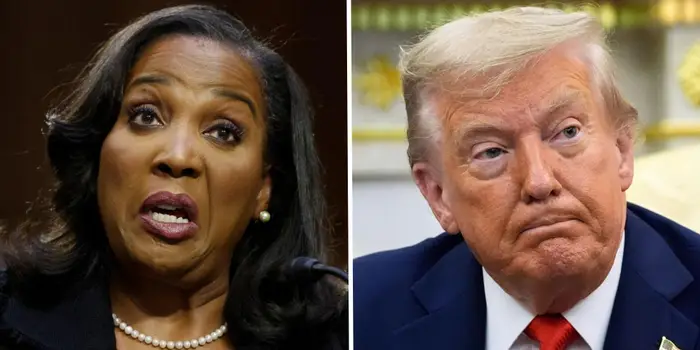
Federal Reserve Governor Lisa Cook has filed a lawsuit challenging President Donald Trump’s attempt to remove her from office, arguing that he lacks the legal authority to do so. The case could reshape long-standing rules on the independence of the U.S. central bank.
According to the lawsuit, Trump violated federal law, which only allows a Fed governor to be dismissed “for cause.” On August 25, Trump announced his intention to fire Cook, accusing her of mortgage fraud dating back to 2021, before she joined the central bank’s board. Cook denies the allegation, calling it baseless.
Cook also requested a temporary restraining order to block her removal until the court reaches a decision. A hearing is scheduled for Friday morning. In her filing, Cook stated that even if the president’s allegations were true—which she firmly rejects—they would not amount to legal grounds for removal. Her legal team argued that minor or unrelated conduct cannot serve as justification for firing a sitting Fed governor.
The lawsuit further claims that Trump violated Cook’s constitutional right to due process by attempting to dismiss her without notice or a hearing. The case has been assigned to U.S. District Judge Jia Cobb, who was appointed by former President Joe Biden. Legal experts suggest the dispute may eventually reach the Supreme Court, which has previously allowed presidents to dismiss other officials but signaled that the Federal Reserve may be an exception.
The conflict has raised global concerns over the independence of the Fed. Markets reacted swiftly after Trump’s announcement, with the U.S. dollar slipping against major currencies. Traders are now betting that the central bank may cut interest rates as early as next month.
A Fed spokesperson said the institution will comply with any court ruling. The White House, meanwhile, defended Trump’s move, claiming that Cook was credibly accused of lying in her mortgage filings and insisting that her removal would strengthen the Fed’s accountability.
Cook, who was appointed in 2022 and became the first Black woman to serve as a Federal Reserve governor, has now become the latest official in Trump’s crosshairs. Earlier this year, he also dismissed Gwynne Wilcox from the National Labor Relations Board, another milestone Black female appointee.
The law that created the Federal Reserve does not clearly define what constitutes “cause” for removal, and no president has ever removed a Fed governor before. This legal vacuum makes Cook’s lawsuit a historic test case.
Mortgage questions about Cook first emerged after Trump-appointed housing regulator William Pulte flagged them to Attorney General Pamela Bondi. The mortgages were taken out in Michigan and Georgia in 2021, when Cook was an academic. Experts have since questioned whether transactions predating her Fed appointment could reasonably justify her removal.
If Cook is forced out, Trump would gain another opportunity to reshape the central bank by appointing his fourth member to its seven-seat board. The president has repeatedly criticized Fed Chair Jerome Powell for not lowering rates and for his management of the central bank’s renovation projects, although Trump has stopped short of attempting to remove Powell himself.
This lawsuit not only determines Cook’s future but also poses a broader question: how much independence the Federal Reserve should maintain from the White House. The outcome could have lasting implications for U.S. monetary policy and global financial markets.