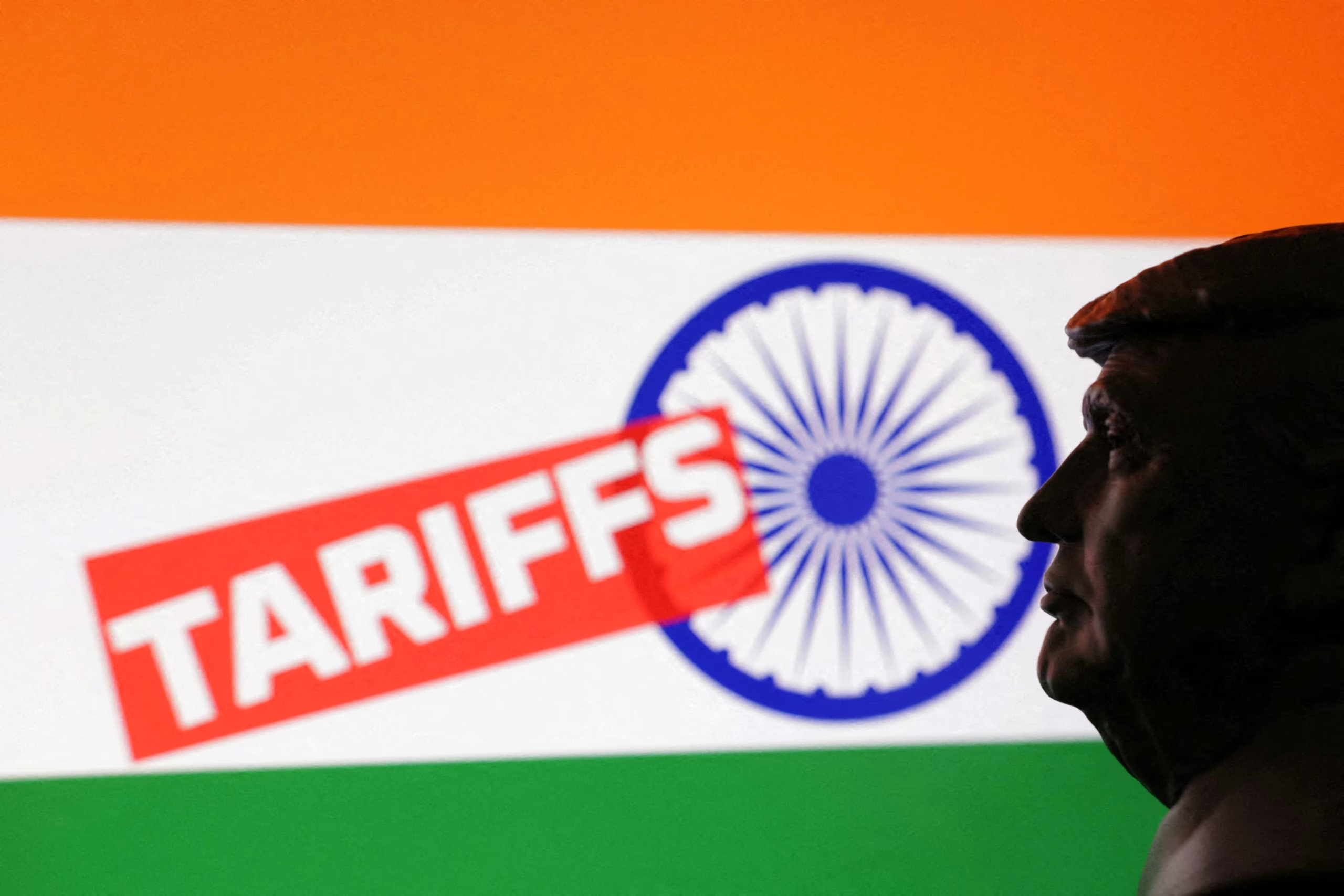
U.S. President Donald Trump signed an executive order on Wednesday imposing an additional 25% tariff on imports from India, citing India’s direct or indirect purchases of Russian oil as the reason behind the move.
This move places India among the highest-tariffed nations, alongside Brazil, and could significantly weaken its trade position compared to regional competitors like Vietnam and Bangladesh. The new tariffs will go into effect 21 days from the order’s issuance.
Wendy Cutler of the Asia Society Policy Institute noted the rapid deterioration in U.S.-India trade relations, warning that the new levy could cut off much of India’s exports to the American market. She emphasized the urgency for both nations to resolve their issues privately, pointing out that Beijing may use this rift as an opportunity to improve ties with Delhi.
Brian Jacobsen of Annex Wealth Management suggested the move might be more symbolic than impactful in the short term. With a 21-day delay before enforcement, the order leaves room for negotiations or carve-outs. The muted market reaction reflects this uncertainty, as many goods may still receive exemptions.
However, some industry voices expressed serious concern. Colin Shah from Kama Jewelry warned the added tariff is a major setback, particularly for the gems and jewelry sector. The new 25% charge, layered on top of the existing 25%, raises the total tariff to 50%, likely causing a steep decline in Indian jewelry exports to the U.S.
A. Prasanna of ICICI Securities echoed this sentiment, calling the total 50% rate a significant blow, although he noted that sectors like pharmaceuticals and electronics remain exempt for now. At such high rates, Indian exporters will struggle to compete with countries enjoying lower duties, typically in the 15–30% range.
Sakshi Gupta of HDFC Bank highlighted the broader economic risk, suggesting India’s GDP forecast for FY26 could fall below 6% if no trade resolution is reached, doubling earlier projected impacts. Economist Teresa John from Nirmal Bank said pressure is building on India to cut Russian oil imports and shift toward alternative sources to avoid prolonged damage.
Gaura Sen Gupta of IDFC FIRST Bank added that if tariffs remain in place until March 2026, India’s GDP could face a downside risk of 0.3% to 0.4%.
Despite the tension, Manoj Mishra of Grant Thornton Bharat pointed out that exports to the U.S. make up only about 2% of India’s GDP. While the impact is real, it’s unlikely to severely affect the broader economy. He stressed the importance of diversifying India’s trade partnerships and leveraging free trade agreements to ensure long-term resilience.
Meanwhile, Mayuresh Joshi of William O’Neil warned of potential short-term market volatility but said structural impacts on major companies like Reliance may be limited due to India’s already diversified crude oil sourcing. Nonetheless, the overall sentiment across export-driven sectors could suffer if clarity or a diplomatic resolution is not achieved soon.