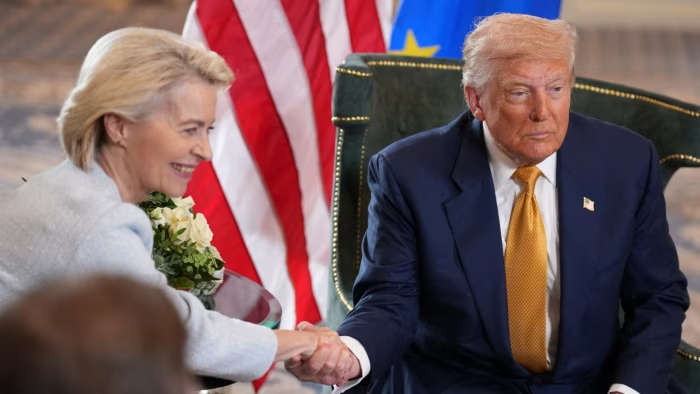
U.S. and EU Seal Trade Deal to End Economic Uncertainty; Key Tariffs and Investments Announced
The United States and the European Union have finalized a major framework trade agreement aimed at resolving months of uncertainty for businesses and consumers. Set to take effect on August 1 via an executive order by President Donald Trump, the deal outlines new tariff structures and major investment commitments.
🔹 Key Elements of the Agreement:
🔸 15% Baseline Tariff:
Nearly all EU imports into the U.S. will now face a 15% flat tariff, replacing previous rates but not stacking on top of them.
🔸 Automotive Sector:
Cars and parts imported from Europe will now face a reduced 15% U.S. tariff, down from the previous 27.5%. In return, the EU will drop car duties from 10% to 2.5%, mirroring past U.S. rates.
🔸 Pharmaceuticals & Semiconductors:
These sectors will also be subject to the 15% rate—but only after the U.S. concludes pending Section 232 investigations. Current duties remain low or zero.
🔸 Other Products Under Review:
Ongoing national security reviews include items like timber, trucks, aircraft, critical minerals, drones, and polysilicon. If included, EU exports would also face up to a 15% tariff.
🔸 Metals:
Existing 50% U.S. tariffs on EU steel and aluminum will stay in place, with copper added from August 1. However, a new quota system is planned to replace the current structure. Exports within quota limits will benefit from lower WTO-agreed tariffs.
🔸 Zero-for-Zero Tariff Zones:
The U.S. and EU will eliminate tariffs on:
- Aircraft and parts
- Certain chemicals
- Generic medicines
- Semiconductor manufacturing tools
- Selected agricultural products (excluding sensitive ones like beef, rice, poultry)
- Natural resources and raw materials
🔸 Wine & Spirits:
Tariff removal is still being negotiated, with faster progress on spirits.
🔸 Agriculture & Fisheries Access:
The EU will allow quota-based access for U.S. seafood (Alaska pollock, Pacific salmon, shrimp), plant-based oils, seeds, grains, processed foods (e.g., ketchup, cocoa).
🔸 Strategic EU Purchases:
The EU committed to buying $750 billion worth of U.S. oil, LNG, and nuclear tech during Trump’s current term—part of its effort to cut reliance on Russian energy.
Additionally, Europe will purchase $46 billion in U.S. AI chips.
🔸 European Investment in U.S.:
European companies are expected to invest $600 billion in the U.S. by the end of Trump’s second term. This estimate is based on existing investment plans.
Japan, separately, pledged up to $550 billion in equity, loans, and guarantees.
🔸 Defense Procurement:
EU nations will increase purchases of U.S. military equipment, though no total value has been announced.
🔸 Regulatory Cooperation:
The EU and U.S. agreed to collaborate on automotive and food safety standards (e.g., streamlining pork/dairy certifications) while maintaining independent rules.
🔸 Additional Cooperation Areas:
The two sides will work together on investment screening, export controls, and addressing non-market policies such as China’s subsidized production.