Chinese Exporters Struggle Amid Ongoing U.S. Tariff Pressures
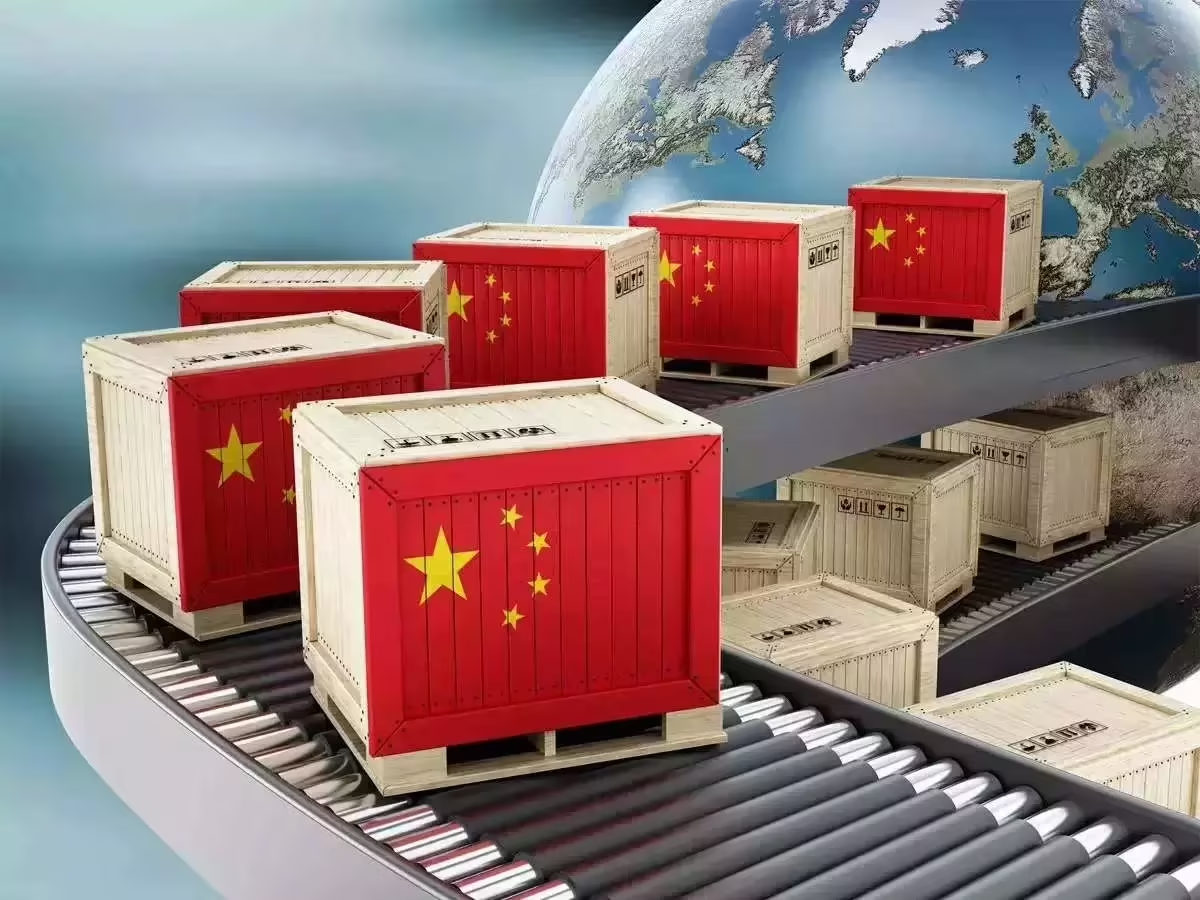
As U.S.-China trade tensions continue to disrupt global supply chains, Chinese exporters are facing significant challenges. High tariffs and policy uncertainty are forcing companies to adapt quickly in a shifting trade environment.
UBS Survey Reveals Decline in U.S. Orders
A recent UBS Evidence Lab survey of 200 senior executives from Chinese manufacturing firms shows the impact clearly. Around 81% of exporters said their U.S.-bound orders dropped compared to last year.
This decline followed the U.S. decision to raise reciprocal tariffs on Chinese goods to 125% in April, before reducing them to 10% in May under the Geneva consensus. Despite this adjustment, most exporters expect continued volatility.
If the current tariffs remain, 87% of companies anticipate a further decline in exports to the U.S., with nearly half expecting drops over 20%.
U.S.-Bound Shipments Drop Sharply
Official Chinese customs data cited by UBS shows that exports to the U.S. fell by 24% year-over-year in the second quarter. Meanwhile, trade with other regions was more balanced: 34% of firms saw increased orders, while 31% reported declines.
Companies Adjust With Price and Contract Strategies
In response, 62% of exporters said they had reached initial agreements with U.S. partners to adjust trade terms. However, most firms struggle to pass on the full tariff costs. On average, only 35–40% of the extra cost is being transferred, compared to higher rates during the 2018–2019 trade war.
One reason is the stronger renminbi, which rose 2% against the U.S. dollar in early 2025, unlike the devaluations seen in past disputes.
To stay competitive, about 50% of firms plan to cut prices, mostly in the range of 11–20%. In contrast, 29% aim to raise prices, possibly due to supply chain advantages or brand strength. However, U.S. import data shows limited impact so far, with prices from China down just 1% in Q2.
Exporters Shift Focus Beyond the U.S.
Facing long-term uncertainty, 46% of exporters plan to expand into new markets, such as Europe, the Middle East, and Northeast Asia. Meanwhile, 38% are relocating production overseas, increasing offshore output from 44% in 2024 to 59% in 2025.
Additionally, 63% of firms now intend to move production out of mainland China, up from 47% in April. Still, 55% say the decision isn’t only about tariffs, citing concerns over future trade risks in other countries.
Government Support Helps Offset Tariff Impact
The Chinese government is also stepping in with policy support. About 78% of exporters reported receiving assistance, including subsidies for global expansion, credit relief, and help shifting sales to domestic markets.
Around 28% of companies say they will redirect 32% of their U.S. exports to domestic buyers. This could lead to slight downward pressure on local prices, according to analysts.
Trade Talks Progress Slowly
Despite ongoing talks between the U.S. and China, most exporters don’t expect a quick resolution. While 94% believe a deal is likely, just 20% think it will happen by Q3 2025. Nearly **75% expect negotiations to continue beyond the current truce deadline of August 12.