Trump Sets 19% Tariff on Indonesian Imports as EU Prepares Countermeasures
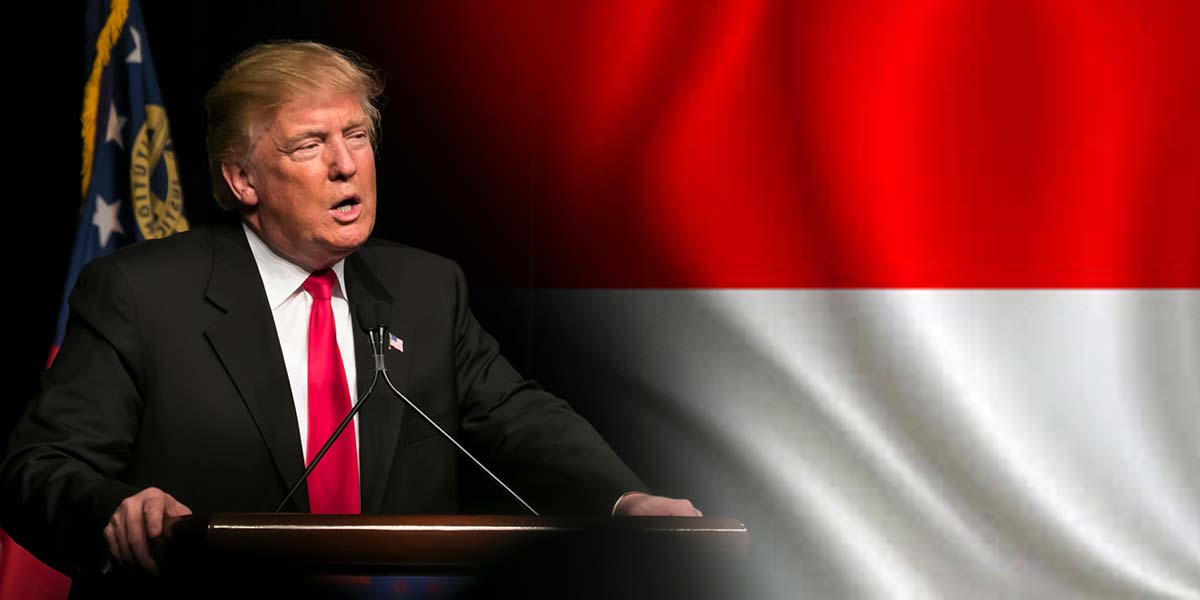
President Donald Trump announced Tuesday that the U.S. will impose a 19% tariff on goods from Indonesia under a new trade agreement, part of a broader effort to secure more favorable trade terms and reduce the U.S. trade deficit. He also hinted at additional deals in the pipeline and unveiled initial plans for tariffs on pharmaceuticals.
The Indonesia deal is one of several trade pacts being finalized ahead of an August 1 deadline, when tariffs on most U.S. imports are scheduled to rise. Trump also indicated that letters detailing new tariff rates for dozens of smaller trading partners would be issued soon.
Although Indonesia is a relatively small trading partner for the U.S., the agreement represents a shift in Washington’s trade policy. The deal mirrors an earlier accord with Vietnam, featuring a flat 19% tariff on Indonesian exports to the U.S., zero tariffs on American exports, penalties on Chinese transshipments via Indonesia, and commitments from Jakarta to purchase U.S. goods.
Trump stated, “They’ll pay 19%, we’ll pay nothing,” adding that the U.S. will gain full market access. He later posted on Truth Social that Indonesia had agreed to buy $15 billion in U.S. energy, $4.5 billion in agricultural products, and 50 Boeing jets, though no timeline was given.
Trade with Indonesia totaled just under $40 billion in 2024, with the U.S. posting an $18 billion goods trade deficit. Top Indonesian exports to the U.S. include palm oil, electronics, footwear, rubber, car tires, and frozen shrimp, according to U.S. Census Bureau data.
An Indonesian government official confirmed that a joint statement is in the works to detail the scope of tariffs and non-tariff trade terms.
The 19% tariff replaces a previously threatened 32% rate, one of many steep tariffs Trump outlined in recent letters to over two dozen countries—including Canada, Japan, and Brazil—with proposed duties ranging from 20% to 50%, including a 50% tariff on copper.
In a speech in Pittsburgh, Trump reiterated his preference for broad tariffs over complex negotiations. However, Treasury Secretary Scott Bessent and Commerce Secretary Howard Lutnick are reportedly working to secure more bilateral deals. Trump also said additional letters would soon be sent to smaller nations, most of which would face tariffs “just over 10%.”
The administration is also planning to introduce tariffs on imported pharmaceuticals by the end of the month. Trump said these would begin at a low rate to allow companies time to shift manufacturing to the U.S., with “very high tariffs” to follow after about a year.
Despite ambitious goals of reaching “90 trade deals in 90 days,” the administration has only finalized a few preliminary frameworks, including agreements with the U.K., Vietnam, and a provisional deal with China that helped delay harsher tariffs.
Trump noted that talks with India are progressing, suggesting that a future agreement would improve access for U.S. firms to India’s vast consumer market.
EU Readies Trade Retaliation
Meanwhile, the European Union is preparing to respond if its trade talks with Washington break down. The European Commission has circulated a draft list of €72 billion ($84.1 billion) worth of U.S. goods that could be targeted with tariffs, including Boeing planes, cars, bourbon whiskey, and agricultural goods like wine, beer, and fresh produce.
The list, which predated Trump’s most recent pressure tactics, responds to earlier U.S. tariffs on cars, car parts, and a 10% baseline duty, but it could be expanded if Trump follows through on his threat to impose a 30% tariff on EU imports starting August 1. European officials say such a move would seriously disrupt trade between two of the world’s largest economies.
Also included in the EU’s proposed retaliation are chemicals, medical devices, precision equipment, and other key industrial and consumer goods, with food and drink tariffs alone valued at over €6.35 billion.