Asian currencies were mostly stable on Tuesday as traders awaited a key U.S. inflation report that could offer more clarity on the Federal Reserve’s interest rate trajectory. At the same time, attention shifted to a batch of Chinese economic data, including a better-than-expected GDP reading.
With only two weeks left to finalize trade talks with the United States, investor sentiment remained cautious, especially as President Donald Trump ramped up tariff threats ahead of the August 1 deadline.
The U.S. Dollar Index, which tracks the dollar against a basket of major currencies, dipped 0.1% during Asian trading, though it held close to three-week highs. Futures on the index showed little movement.
China’s Q2 GDP Beats Expectations; Industrial Output Strong
New data showed China’s economy grew 5.2% year-on-year in Q2 2025, slightly outpacing expectations of 5.1%, supported by robust exports and government-led stimulus measures.
This stronger performance suggested that the U.S.-China trade war had a limited impact during the quarter, as elevated tariffs were in effect for only about a month before a de-escalation began in mid-May.
Additional data revealed that industrial production rose more than forecast in June, signaling improving demand for Chinese exports. However, retail sales growth underwhelmed, and the unemployment rate remained unchanged at 5%.
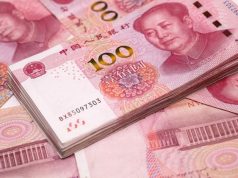
The Chinese yuan showed little reaction to the economic releases. Both onshore (USD/CNY) and offshore (USD/CNH) yuan pairs ticked up 0.1% on the day.
Investors Eye U.S. CPI Amid Tariff Risks
Markets are now focused on the upcoming release of June U.S. consumer price index (CPI) data, which could provide further insight into how Trump’s tariff policies are affecting the economy.
Federal Reserve Chair Jerome Powell has said that tariffs are likely to push inflation higher during the summer, which could prompt the central bank to hold off on rate changes until later in the year.
Meanwhile, Trump maintained pressure globally, issuing new tariff threats against the European Union and Mexico. Just a day earlier, he also warned that the U.S. could impose 100% secondary tariffs on Russia if President Putin fails to reach a ceasefire agreement on Ukraine within 50 days.
Despite the aggressive rhetoric, recent tariff threats have not significantly swayed the broader markets, though many investors are avoiding large positions amid persistent uncertainty.
Currency Market Snapshot
- Japanese yen (USD/JPY) and South Korean won (USD/KRW) saw little movement.
- Australian dollar (AUD/USD) slipped 0.1%.
- Indian rupee (USD/INR) declined 0.1%, while Indonesian rupiah (USD/IDR) gained 0.5%.
- Singapore dollar (USD/SGD) remained largely unchanged.