Investors Enter Trump Tariff Deadline with Calm as Market Prices in Likely Outcomes
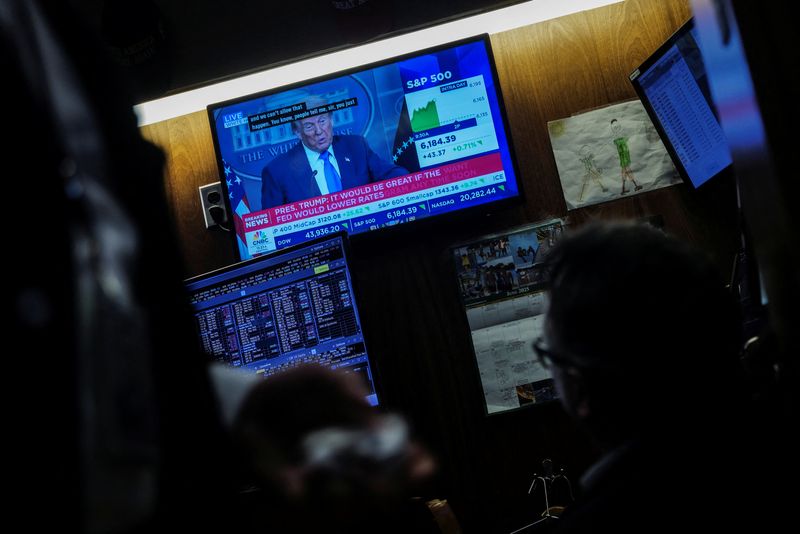
As U.S. President Donald Trump’s tariff deadline approaches this Wednesday, global investors remain largely unfazed, expecting a range of relatively mild scenarios that many believe have already been priced into the market.
With the 90-day pause on Trump’s “Liberation Day” tariffs set to expire, the president announced that on Monday, the first set of letters outlining proposed tariffs would be sent to 12 countries. Despite the looming deadline, investors who have been closely watching the situation anticipate both delays and ongoing negotiations, assuming that Trump is unlikely to finalize deals with all trading partners this week.
Investor sentiment appears steady.
“There’s far more confidence now—less anxiety—around tariff-related headlines,” said Jeff Blazek, co-chief investment officer of multi-asset strategies at Neuberger Berman in New York. “Markets believe the deadlines have enough flexibility, and unless there’s a major shock, worst-case scenarios are no longer a serious concern.”
The proposed tariff levels and implementation timelines remain fluid. Trump recently suggested tariffs could reach up to 70% starting August 1—well above the 10%-50% range announced back in April.
So far, the U.S. has only secured a limited agreement with the UK and a preliminary deal with Vietnam. Negotiations with India and Japan have stalled, while discussions with the European Union have also hit roadblocks.
Despite the uncertainty, global equity markets have rallied. Since Trump’s April 2 announcement, world stocks have gained 11%, recovering from a 14% drop in the days following and rising 24% from those lows.
“If Liberation Day was the earthquake, these tariff letters are more like aftershocks,” said Rong Ren Goh, a fixed-income portfolio manager at Eastspring Investments in Singapore. “Even if the rates go higher than 10%, their impact will be softer. Liquidity is so abundant in the system that most investors can’t afford to sell or deleverage without risking underperformance. April taught that lesson the hard way.”
Fiscal Policy and Fed in Focus
Markets have also been preoccupied with the drawn-out congressional debate over Trump’s sweeping tax and spending plan, which he signed into law on Friday. The legislation makes his 2017 tax cuts permanent, a move cheered by equity markets but viewed with caution by bond investors, who worry it could add over $3 trillion to the current $36.2 trillion national debt.
The S&P 500 and Nasdaq hit record highs on Friday, marking three consecutive weeks of gains. Europe’s STOXX 600 index is up 9% over the past quarter.
However, fears of tariff-driven inflation have weighed on U.S. Treasury yields and the dollar, while also reshaping expectations for Federal Reserve policy. Futures markets now show little expectation of a Fed rate cut this month and only two 25-basis-point reductions by year-end.
The U.S. dollar has lost some of its appeal as a safe-haven currency, partly due to uncertainty surrounding tariff policy. The dollar index—which measures its performance against six major peers—has recorded its worst first half of the year since 1973, falling 11%, including a 6.6% drop since April 2.
“Markets are factoring in a general tariff level closer to 10%, rather than a return to the higher 35% or 40% levels,” said John Pantekidis, chief investment officer at TwinFocus in Boston. While he remains cautiously optimistic about U.S. equities this year, interest rates are the key variable on his radar.
He expects rates to decline in the second half of the year but warns that any market concerns over the fiscal impact of the new legislation could push rates higher—a scenario that could change the outlook significantly.