G7 Leaders Gather in Canada Amid Strains with Trump Over Trade, Global Crises
Leaders of the Group of Seven nations are convening in the Canadian Rockies starting Sunday, with mounting tensions between the U.S. and its allies over trade and foreign policy overshadowing the summit. Canada, the host nation, is seeking to avoid open conflict with U.S. President Donald Trump.
Canadian Prime Minister Mark Carney has outlined the summit’s main goals as bolstering global security, developing critical mineral supply chains, and creating jobs. However, contentious issues like U.S. tariffs and the wars in the Middle East and Ukraine are expected to dominate discussions.
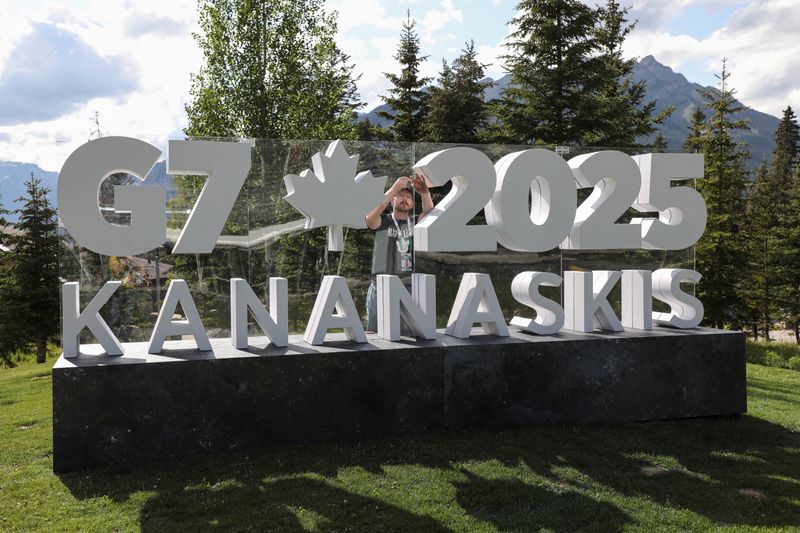
The summit takes place at Kananaskis, a mountain resort roughly 90 km (56 miles) west of Calgary. Recalling the 2018 summit hosted by Canada, which ended in acrimony after Trump abruptly departed and lashed out at then-Prime Minister Justin Trudeau, some are wary of history repeating itself.
“This will be considered a success if Trump avoids a disruptive outburst,” said Roland Paris, a former Trudeau adviser and professor at the University of Ottawa.
Tensions are further complicated by Trump’s past remarks about annexing Canada and by Carney’s threat of retaliatory tariffs if U.S. levies on Canadian metals aren’t removed.
Due to the risk of discord, Canadian officials have opted not to issue the usual joint communique. Instead, they will provide chair summaries to help contain disagreements and preserve U.S. engagement.
A Canadian official said the emphasis will be on finding areas where all G7 members—Canada, the U.S., the U.K., France, Germany, Italy, and Japan—can align on tangible actions.
The summit is expected to run longer than usual to accommodate Trump’s bilateral meetings. Leaders from countries outside the G7, including Ukraine, India, Mexico, and Brazil, will also attend part of the summit, many seeking one-on-one talks with Trump.
A senior U.S. official said the summit will cover topics such as trade, critical minerals, AI, security, drug trafficking, wildfires, and energy resilience.
The recent frosty White House meeting between Trump and Ukrainian President Volodymyr Zelenskyy has set a cautious tone. Ukrainian officials now say even a cordial interaction at the G7 would count as a success, given fading hopes for a strong pro-Ukraine statement.
Diplomats from Europe hope the summit—and an upcoming NATO meeting—will press Trump to support a new sanctions package aimed at pushing Russia toward a ceasefire.
According to Max Bergmann of the Center for Strategic and International Studies, the summit will serve as an early indicator of whether Trump intends to engage constructively with allies.
French President Emmanuel Macron, who has had a candid relationship with Trump, recently announced the postponement of a planned UN-backed peace conference on Israel-Palestine, originally scheduled for after the G7 summit.