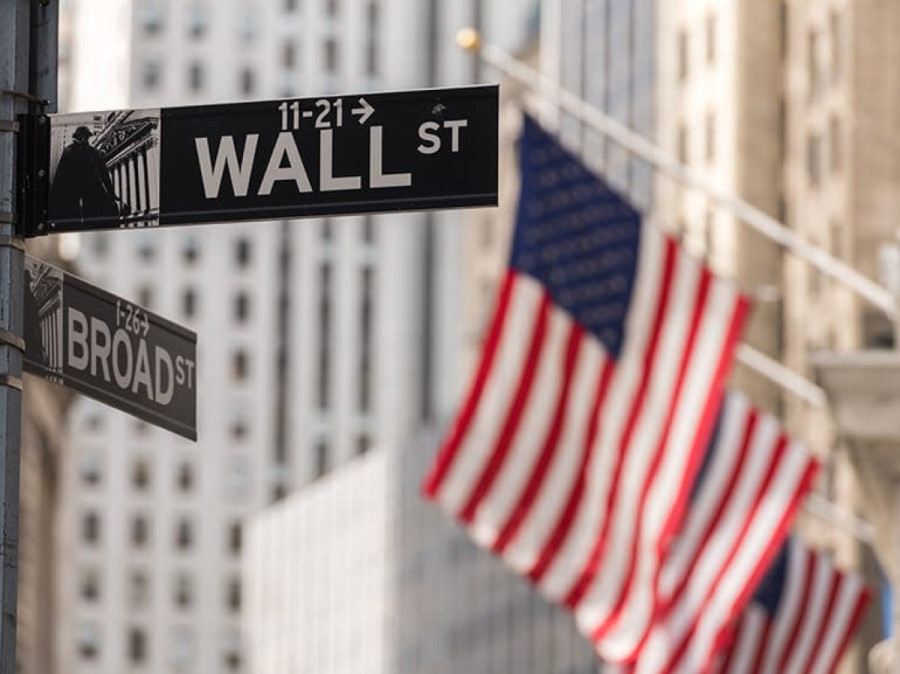
Wall Street closed sharply lower on Friday after Iran launched missile strikes on Israel, retaliating against earlier Israeli attacks that targeted Tehran’s nuclear and missile infrastructure.
Sirens blared across Israel, with explosions reported over Tel Aviv and Jerusalem, as Iranian missiles were fired in response to Israeli efforts to weaken Iran’s nuclear capabilities. The escalation in Middle East tensions rattled global markets and weighed heavily on investor sentiment.
Oil prices surged nearly 7% amid concerns that the conflict could disrupt crude supplies from the region. U.S. energy stocks benefited from the spike, with ExxonMobil (NYSE: XOM) gaining 2.2% and Diamondback Energy (NASDAQ: FANG) up 3.7%.
“We may be heading toward a full-scale military conflict,” said Elias Haddad, senior market strategist at Brown Brothers Harriman. “If the Strait of Hormuz—a key passage for a third of global oil—were to be blocked, the consequences for markets could be severe.”
Airline stocks dropped sharply due to fears of rising fuel costs. Delta Air Lines (NYSE: DAL) lost 3.8%, United Airlines declined 4.4%, and American Airlines (NASDAQ: AAL) slipped 4.9%.
In contrast, defense contractors saw gains. Lockheed Martin (NYSE: LMT), RTX Corporation, and Northrop Grumman (NYSE: NOC) each climbed more than 3%.
The S&P 500 fell 1.13% to close at 5,976.97. The Nasdaq dropped 1.30% to 19,406.83, and the Dow Jones Industrial Average slid 1.79% to 42,197.79.
Ten of the S&P 500’s 11 sectors ended the day in the red, with financials leading losses at 2.06%, followed by a 1.5% decline in information technology.
Trading volume reached 17.9 billion shares, slightly below the 20-session average of 18.2 billion.
For the week, the S&P 500 slipped 0.4%, the Nasdaq was down 0.6%, and the Dow dropped 1.3%.
Adobe (NASDAQ: ADBE) tumbled 5.3% after investors expressed concern that its adoption of AI technologies may be lagging, despite an improved annual revenue forecast.
Oracle (NYSE: ORCL) surged 7.7% to a record high, building on momentum from the previous session after issuing a strong outlook fueled by AI demand.
Nvidia (NASDAQ: NVDA) and Apple (NASDAQ: AAPL) both lost ground, falling 2.1% and 1.4%, respectively.
Payment giants Visa (NYSE: V) and Mastercard (NYSE: MA) each dropped more than 4% following a Wall Street Journal report that major retailers are exploring cryptocurrencies as alternatives to traditional payment networks.
Earlier in the week, inflation concerns were tempered by softer-than-expected producer and consumer price data and stable jobless claims, which helped ease worries about tariff-driven cost pressures. The Federal Reserve is widely expected to keep interest rates unchanged at its upcoming meeting.
With optimism growing around the potential resolution of U.S. trade disputes and reduced tariffs under President Donald Trump’s administration, the S&P 500 remains just shy of its February record highs.
The University of Michigan’s June survey showed consumer sentiment improved for the first time in six months, offering a positive note amid trade uncertainty.
Decliners outnumbered gainers in the S&P 500 by more than six to one. The index recorded 10 new highs and 6 new lows, while the Nasdaq logged 37 new highs and 131 new lows.