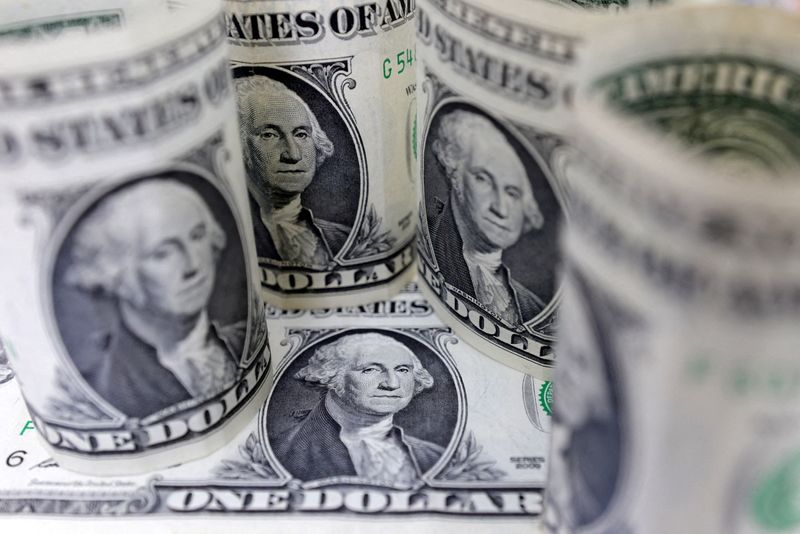
The U.S. dollar weakened on Thursday amid growing expectations of interest rate cuts by the Federal Reserve and ongoing uncertainty surrounding global trade negotiations.
Market sentiment was further influenced by comments from President Donald Trump, who said he might extend the July 8 deadline for finalizing trade agreements with several countries. However, he added that the U.S. would soon issue formal letters outlining trade terms, which other nations could either accept or reject.
His remarks echoed statements from Treasury Secretary Scott Bessent, who indicated that countries engaged in good-faith negotiations may receive extensions beyond the July deadline.
The lack of concrete progress following this week’s vague U.S.-China trade framework deal contributed to investor uncertainty and weighed on the dollar. The subdued mood prompted traders to shift away from the greenback.
As a result, the euro reached a seven-week high early in the session before trimming gains to trade at $1.1515. The British pound climbed 0.34% to $1.3583, while the Japanese yen rose 0.4% to 143.95 per dollar. The dollar index, which measures the greenback against a basket of major currencies, fell to its lowest level since April 22, landing at 98.284.
“There’s no clear master plan, but it seems Trump is trying to increase pressure around trade talks,” said Rodrigo Catril, senior currency strategist at National Australia Bank. “Markets are reacting with caution, knowing the situation could shift quickly over the coming weeks.”
The dollar also lost ground to the Swiss franc, falling 0.44% to 0.8169. Meanwhile, the Australian dollar dipped 0.12% to $0.6496 amid deteriorating risk appetite, while the New Zealand dollar edged up 0.1% to $0.6033.
Pressure on the greenback was also fueled by weaker-than-expected U.S. inflation data released Wednesday, which reinforced speculation that the Fed could cut rates as early as September. Investors now await Thursday’s producer price index for further clues on inflation trends.
In China, the onshore yuan gained 0.2% to 7.1810 per dollar. However, its rise was limited by the fragile nature of the current U.S.-China trade ceasefire. “Without full transparency on the agreement, it’s uncertain whether the talks are moving the two nations toward real cooperation,” said Mantas Vanagas, senior economist at Westpac.
Euro Strengthens Further
The euro held onto recent gains on Thursday after surging against multiple currencies in the prior session. Against the yen, it traded at 165.77 after reaching 166.42—its highest since October. The euro also rose 0.33% against the Australian dollar, extending a 0.9% increase from the day before, and touched a one-month high of 84.88 pence versus the pound.
Though there was no specific event driving the rally, analysts noted that hawkish signals from the European Central Bank (ECB) have provided recent support. Last week, the ECB cut rates as expected but hinted at a pause in its easing cycle after inflation returned to the 2% target.
“Reduced expectations for further ECB rate cuts have helped support the euro,” said Carol Kong, a currency strategist at Commonwealth Bank of Australia.
This outlook contrasts with expectations for renewed Fed rate cuts later this year—especially as President Trump continues to press for lower interest rates. He also recently stated that a decision on the next Fed chair is imminent, adding that a “good” Fed chief would reduce rates.
Buoyed by a softer dollar and renewed investor interest in European assets, the euro has climbed nearly 11% year-to-date.