Elon Musk Steps Down from Trump Administration After Contentious Government Reform Role
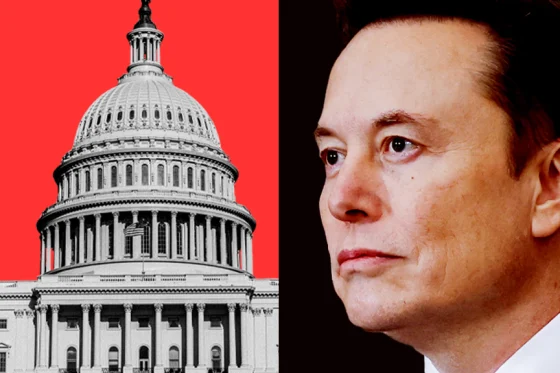
Elon Musk, CEO of Tesla (NASDAQ: TSLA) and the world’s richest individual, is leaving his role in the Trump administration, ending a turbulent stint that saw sweeping — and controversial — attempts to overhaul federal agencies, but ultimately fell short of achieving the dramatic cost savings Musk had envisioned.
A White House official confirmed to Reuters late Wednesday that Musk’s departure would begin immediately. Musk himself acknowledged his exit in a post on X (formerly Twitter), expressing gratitude to President Donald Trump as his time as a special government employee with the Department of Government Efficiency (DOGE) came to a close.
The exit was abrupt and low-key. Sources say Musk made the decision without a final conversation with Trump, and that the matter was settled at a senior staff level.
While the exact reason for his sudden departure remains unclear, Musk left just one day after publicly criticizing Trump’s flagship tax proposal, calling it excessively costly and claiming it undermined the work he was doing at DOGE. The criticism reportedly infuriated senior administration officials, including Deputy Chief of Staff Stephen Miller, prompting urgent calls to Republican senators to reinforce Trump’s backing for the bill.
Despite remaining personally close to Trump, Musk’s influence had been slowly eroding. Initially a dominant force within the administration — known for his bold, unconventional style — Musk quickly became a lightning rod for controversy. At February’s Conservative Political Action Conference, he famously wielded a red chainsaw on stage, declaring, “This is the chainsaw for bureaucracy.”
On the campaign trail, Musk had promised DOGE would eliminate $2 trillion in federal spending. As of now, the agency estimates it has saved $175 billion — a figure Reuters could not verify independently.
Musk’s disdain for the civil service was no secret. He often predicted that ending COVID-era telework policies would trigger a welcome wave of resignations. However, cabinet officials who once embraced his bold approach increasingly pushed back, especially after Trump reminded them in March that staffing authority ultimately rested with department heads, not Musk.
Throughout his tenure, Musk clashed with key cabinet figures — including Secretary of State Marco Rubio, Transportation Secretary Sean Duffy, and Treasury Secretary Scott Bessent — and labeled trade adviser Peter Navarro a “moron.” Navarro shrugged off the insult, saying, “I’ve been called worse.”
In recent weeks, Musk signaled that he was preparing to wind down his government role. During a Tesla earnings call in April, he said he would scale back public duties to refocus on his businesses. In an interview with The Washington Post, Musk said, “The federal bureaucracy is worse than I expected. Improving things in D.C. is a serious uphill battle.”
DOGE to Continue Without Musk
Musk’s 130-day appointment was set to expire around May 30. The Trump administration has indicated that DOGE’s work will go on, with cabinet members now discussing how to proceed while trying not to alienate GOP lawmakers. While some DOGE structures will remain, department leaders are expected to reclaim authority over staffing and budgets.
“The DOGE mission will only grow stronger over time as it becomes embedded in government culture,” Musk said.
To date, DOGE claims to have cut 260,000 jobs — roughly 12% of the federal civilian workforce — primarily through buyouts, early retirements, and threats of termination, according to a Reuters review.
However, the initiative has also run into obstacles. Courts have at times reversed DOGE efforts to dismantle agencies, and downsizing has caused operational delays, higher procurement costs, and a loss of scientific and technical talent.
Tensions peaked earlier this week when Musk went on CBS News to denounce the cost of the GOP’s tax and spending package, saying it increased the deficit and undermined DOGE’s progress.
A source told Reuters that his public criticism of Trump’s policy deeply upset senior aides and may have been a tipping point for his departure.
Meanwhile, Musk’s dual role in business and politics has drawn backlash. Some Tesla investors have urged him to step back from government and focus more on the company, which is struggling with declining sales and stock performance.
Despite this, Musk defended his position, stating he had been granted unprecedented authority by Trump to restructure the federal government. He also revealed he spent nearly $300 million supporting Trump and Republican candidates last year, but now intends to dramatically reduce his political contributions.
“I think I’ve done enough,” Musk said at a recent economic forum in Qatar.