Federal Court Blocks Trump’s Proposed Trade Tariffs, Citing Overreach of Authority
A federal court on Wednesday struck down former President Donald Trump’s proposed reciprocal tariffs on key U.S. trading partners, ruling that he had exceeded his legal powers.
The U.S. Court of International Trade found that Congress alone holds the constitutional authority to regulate foreign commerce, and determined that Trump’s invocation of emergency powers could not override this legislative control.
The decision stems from a lawsuit filed by the Liberty Justice Center on behalf of five small American importers affected by the tariffs. These businesses brought the case after Trump targeted a range of countries with steep trade levies.
In its ruling, the court rejected the administration’s use of the International Emergency Economic Powers Act (IEEPA) as legal grounds for the tariffs. It concluded that the act did not provide the president with broad authority to impose sweeping tariffs on imports from virtually every nation.
“The court does not interpret IEEPA as granting such unchecked power and, accordingly, nullifies the tariffs challenged in this case,” the ruling stated.
This decision represents a major setback for Trump’s tariff agenda, particularly his efforts to penalize countries with significant trade surpluses with the U.S. However, reports indicate that the White House plans to appeal the ruling.
In a social media post following the decision, Trump declared he was “on a mission from God” and warned, “nothing can stop what is coming.” It was unclear whether these remarks were directly in response to the court ruling.
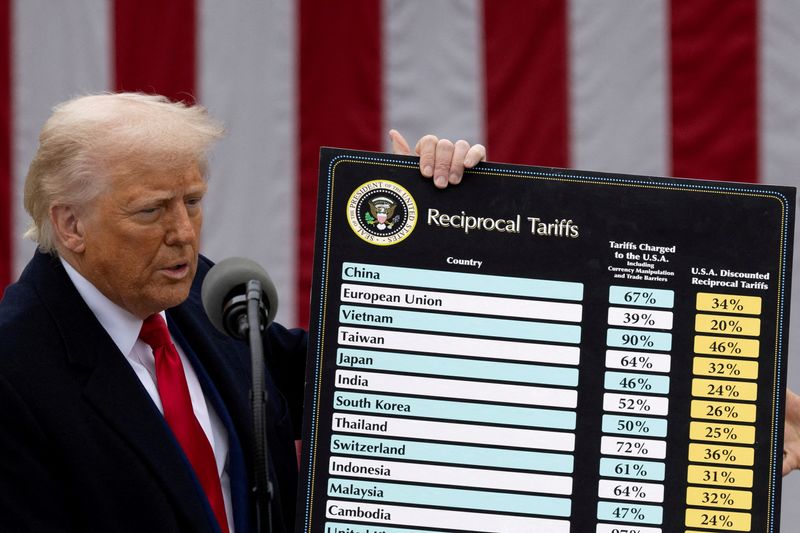
Trump originally announced the tariff plan in early April, dubbing the day “Liberation Day.” The proposed policy included double-digit tariffs on several major trading partners, as well as nations he claimed were acting as intermediaries for Chinese exports.
Later, Trump delayed the implementation of most tariffs by 90 days—excluding China. Tariffs on Chinese goods surged to as high as 245% in April, before the U.S. and China agreed to de-escalate trade tensions in early May.