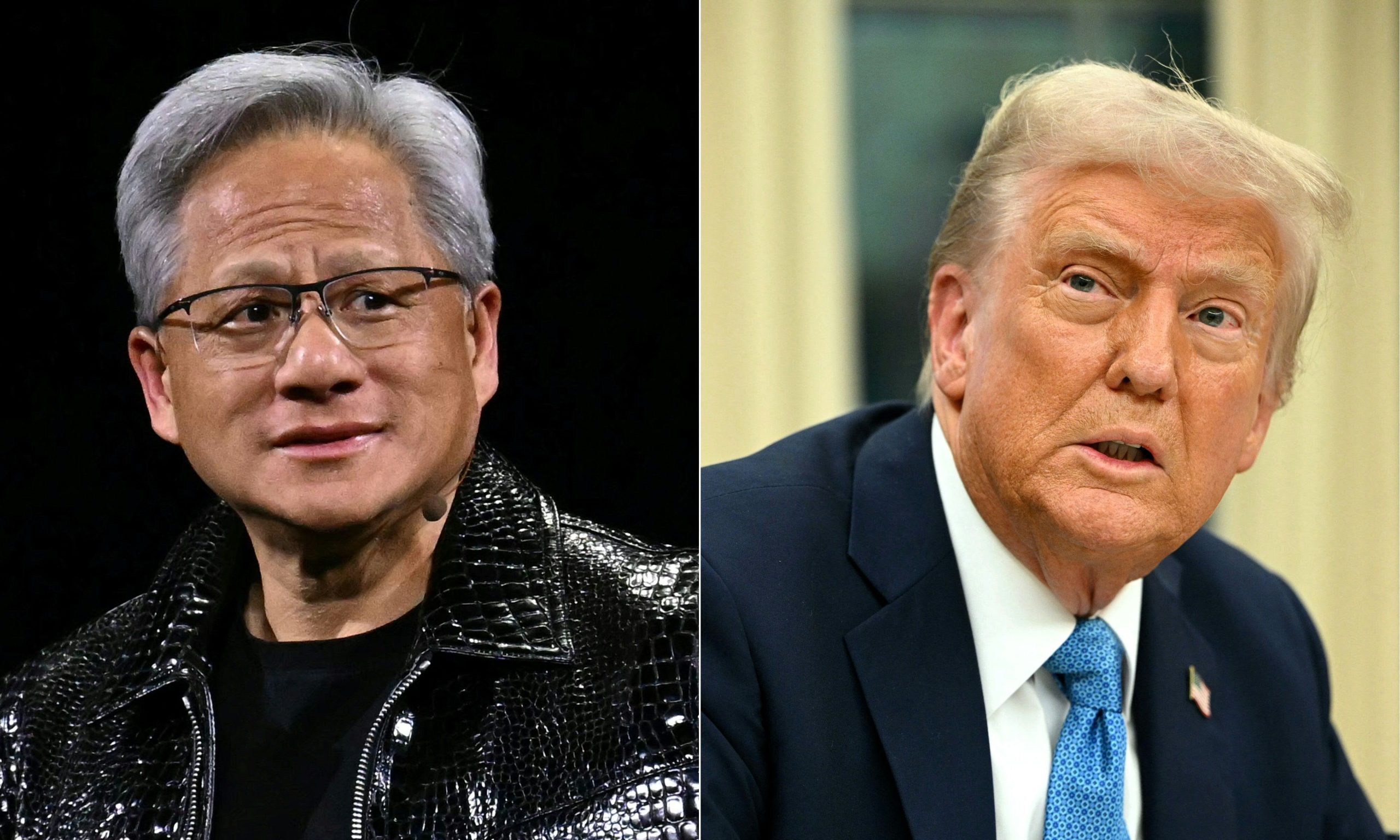
Nvidia CEO Jensen Huang on Saturday commended President Donald Trump’s initiatives to strengthen the U.S. tech sector, as the company unveiled a new collaboration with Swedish firms to build artificial intelligence infrastructure in Sweden.
Nvidia (NASDAQ: NVDA) will supply its latest AI data center technology to a consortium of Swedish companies, including telecoms manufacturer Ericsson (BS: ERICAs) and pharmaceutical firm AstraZeneca (NASDAQ: AZN).
This announcement follows a series of similar partnerships recently launched by Nvidia in Saudi Arabia and the UAE, made possible after the Trump administration reversed an export restriction on AI chips previously enacted under former President Joe Biden.
Huang, who had earlier criticized such restrictions as ineffective, said President Trump’s policies aimed to ensure American tech firms remain globally competitive.
“Four years ago, U.S. tech firms were thriving in China. We’ve now lost nearly half our market share while rivals have gained ground,” Huang said during a visit to Norrköping, where he received an honorary doctorate from Linköping University.
“The President wants U.S. technology to succeed, for Nvidia and other American companies to export globally, drive revenue, create tax income, and reinvest in domestic growth,” he added.
The Trump administration’s broader economic strategy includes aggressive tariffs intended to spur domestic industry, bring manufacturing jobs back to the U.S., and increase tax income.
However, critics—including some economists and business leaders—warn that such policies risk economic contraction by raising costs, disrupting supply chains, and dampening consumer and business sentiment.
Still, Huang called many of the administration’s re-industrialization efforts “visionary.”
“Building manufacturing strength in the U.S., securing the supply chain, and ensuring redundancy and diversification—those are all strong, forward-thinking strategies,” Huang said.