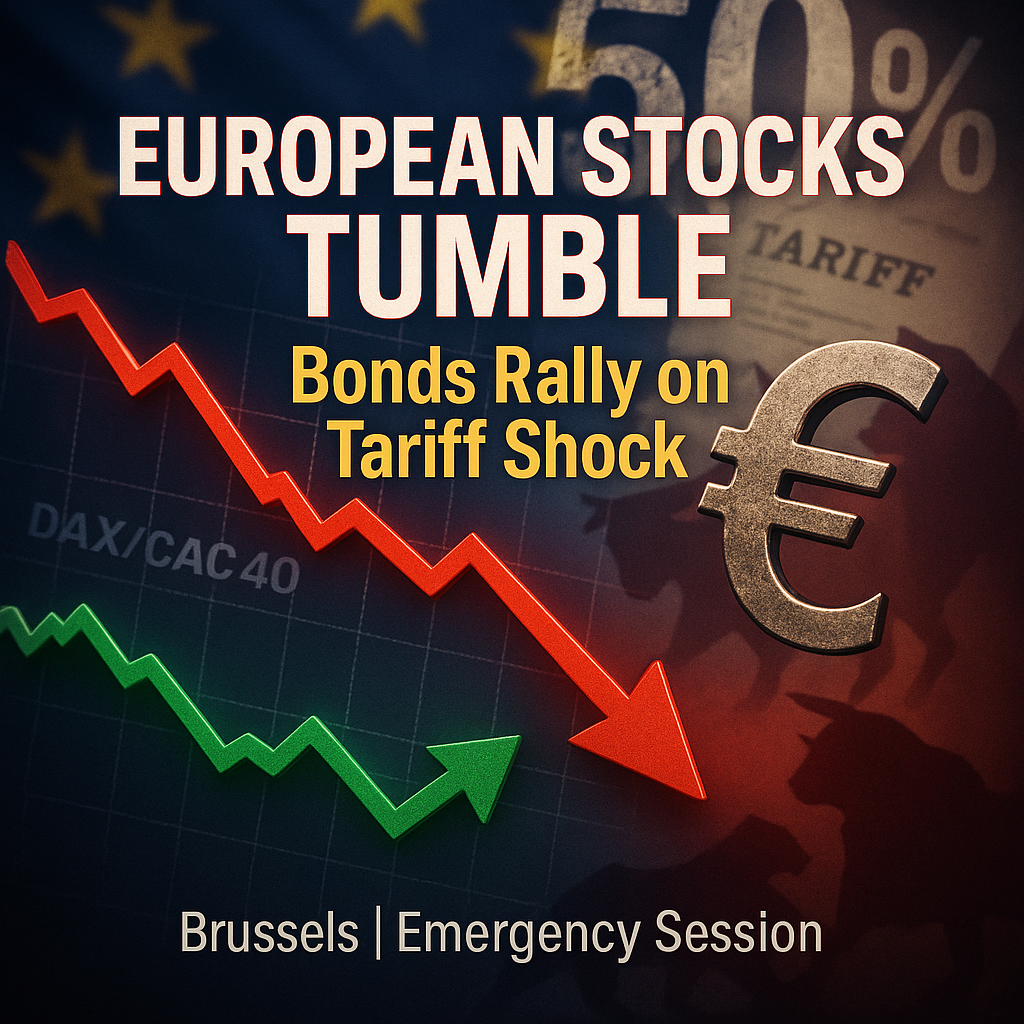
European stock markets slumped, the euro reversed some of its earlier gains, and government bond yields across the euro zone plunged on Friday after U.S. President Donald Trump announced plans to impose a 50% tariff on EU imports starting June 1.
Trump’s announcement, made via social media and including criticism of Apple (NASDAQ:AAPL), disrupted investor expectations that previously announced tariffs from early April might be negotiated away—a belief that had driven recent market recoveries.
The pan-European Stoxx 600 index dropped 1.5%, with shares in the automotive and luxury sectors each sinking more than 3%. Germany’s DAX index, known for its export-oriented firms, declined 2.3%.
U.S. stock futures also took a hit, with S&P 500 futures falling around 1.5% amid concerns that the tariffs could drag down both U.S. and global economic growth.
“This marks a significant intensification of trade tensions,” said Holger Schmieding, chief economist at Berenberg. “With Trump, there’s always uncertainty, but this could seriously damage both the U.S. and EU economies, prompting retaliation from the EU.”
While the White House has been in trade talks with various nations and reached agreements with the UK and China, the constant shifts in tariff policy have created significant volatility and uncertainty for long-term investors.
Following the initial tariff threat on April 2, the STOXX 600 index had dropped about 12% but rebounded steadily, recovering 16% from the lows by earlier this week. However, it now sits just under 1% below its April 2 level. Meanwhile, European market volatility surged to its highest one-day increase since the April tariff turmoil.
The European Commission recently forecast slower economic growth in the euro area due to the ongoing trade conflict with the U.S. and the uncertainty surrounding its resolution.
Concerns over the economic impact have led investors to anticipate further monetary easing by the European Central Bank and shift their money into safer government bonds. Yields on Germany’s two-year bonds fell 8 basis points to 1.75%, while 10-year yields dropped 7 basis points to 2.57%.
In foreign exchange, the Japanese yen gained the most as a safe haven asset. The U.S. dollar fell 1% against the yen to 142.5, while the euro slipped 0.5% to 161.58 yen. Against the dollar, the euro trimmed earlier losses and was last up 0.5% at $1.1335, reflecting a cautious balance between tariff-related concerns and euro zone growth prospects.