Coinbase Reveals 90% of Crypto Assets Fail Listing Standards: Inside the Selection Process
Highlights
- Coinbase rejects 90% of reviewed crypto assets for failing to meet listing standards.
- The Digital Asset Support Group (DASG) conducts legal, compliance, and technical reviews.
- The platform recorded $17 billion in futures trading, with Bitcoin pairs contributing $15 billion.
- Toshi (TOSHI) surged 200% after being added to Coinbase’s roadmap, showcasing the exchange’s market influence.
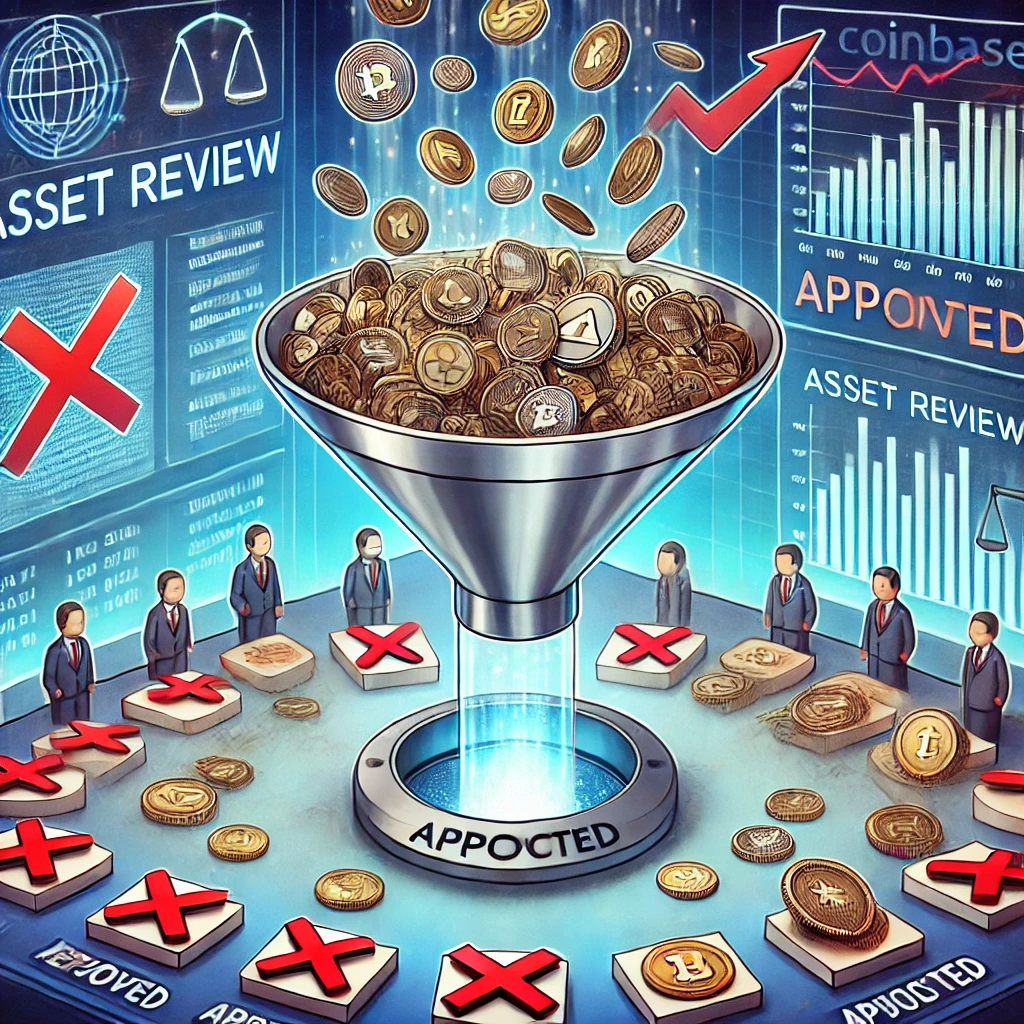
Coinbase has disclosed that nearly 90% of crypto assets evaluated do not meet its listing requirements. The platform’s selection process involves a thorough review by the Digital Asset Support Group (DASG), focusing on legal, compliance, and technical aspects to ensure that only secure and viable projects make the cut.
Coinbase’s Rigorous Listing Process
In a post on January 15, Coinbase outlined its multi-step process for asset listing. The first stage, led by DASG, evaluates the security, regulatory compliance, and technical strength of assets. The strict standards result in the rejection of approximately 90% of reviewed tokens.
Once DASG approval is granted, the asset undergoes further business analysis, which examines market demand, social sentiment, trading volume, and the project’s development progress. Factors such as the team’s track record and the distribution mechanism also play a role. Native blockchain assets often require longer review timelines due to their technical complexity.
Asset Prioritization and Review Categories
Coinbase classifies assets into three categories: standard tokens (e.g., ERC20, SPL), native blockchain assets, and pre-launch tokens. Standard tokens are integrated faster due to established protocols, while native blockchain assets require extensive technical efforts and are prioritized based on their market capitalization and trading volume.
After listing, Coinbase continues to monitor listed assets to ensure ongoing compliance with its standards. Delisting may occur due to legal or technical issues, low trading volumes, or lack of project development. The platform also reviews liquidity and trading activity to maintain user trust and safeguard its reputation.
Trading Volume and Market Impact
Coinbase remains a dominant force in the U.S. crypto market, with $17 billion in futures trading volume as per Coinglass data. Bitcoin pairs accounted for $15 billion, reinforcing Bitcoin’s market leadership. The platform’s open interest in Bitcoin reached $129 million, indicating its significant influence on the market.
Impact of Coinbase Listings
Coinbase listings often lead to significant price surges for the included tokens. For instance, Toshi (TOSHI) saw a 200% price increase after its inclusion in Coinbase’s roadmap, rising to $0.0002331 with a $98 million market cap and $65 million in 24-hour trading volume. This highlights Coinbase’s ability to boost a token’s visibility and adoption.
COIN Stock Performance
Coinbase’s native stock (COIN) is trading at $255, reflecting a 4% gain in the past 24 hours and a market cap of $64 billion. As Coinbase continues to shape the U.S. crypto landscape, its impact on trading activity, asset listings, and overall market dynamics remains substantial.